
IndiGo Set to Dominate Navi Mumbai Airport with Aggressive Capacity Push

Author: Ajjay Bhagyakar | Published by: Griha Realty
Source: Business Standard
Introduction
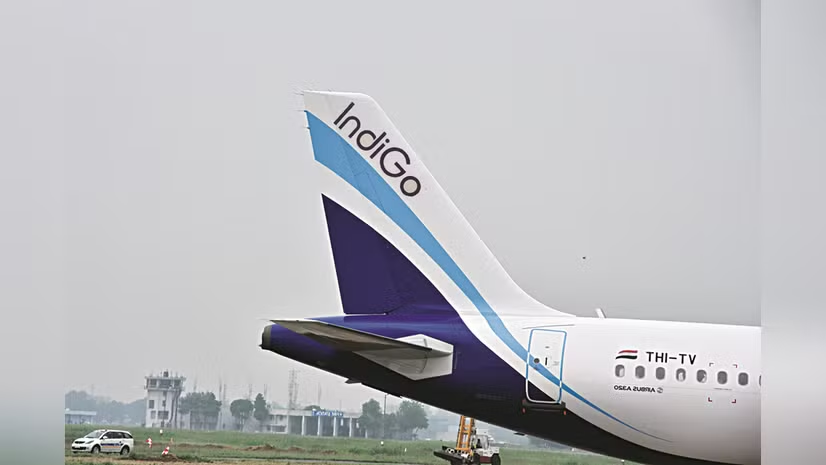
India’s largest airline, IndiGo, is rapidly strengthening its position at the Navi Mumbai International Airport, emerging as the clear market leader in the early phase of operations.
With an aggressive expansion strategy, IndiGo is not just participating in the airport’s growth—it is dominating it, IndiGo Set to Dominate Navi Mumbai Airport with Aggressive Capacity Push.
Market Leadership
IndiGo holds ~70% share of departing flights at the airport
Operating around 55 daily departures (385 weekly flights)
Total airport departures surged from 20/day (March) to 80/day (April)
👉 This rapid scale-up has already made the airport one of India’s fastest-growing aviation hubs.
Massive Network Expansion
IndiGo is connecting Navi Mumbai to 45+ destinations, including:
Delhi
Bengaluru
Hyderabad
Kolkata
Chennai
Ahmedabad
Lucknow
👉 This wide network gives IndiGo a first-mover advantage, capturing both business and leisure travel demand early.
Why IndiGo Is Winning
1. Fleet Expansion Advantage
IndiGo has been consistently adding new aircraft, including A320neo planes, allowing it to scale faster than competitors.
2. Early Entry Strategy
Being among the first major airlines to operate from NMIA helped IndiGo:
✔️ Capture prime slots
✔️ Build customer loyalty early
✔️ Establish network dominance
3. Operational Simplicity
Its low-cost, high-efficiency model enables:
✔️ Faster turnaround times
✔️ Lower operating costs
✔️ Higher route flexibility
Competitor Challenges
While IndiGo is expanding aggressively, competitors face hurdles:
Air India Group has raised concerns over:
Higher tariffs
Split operations between two airports
Connectivity gaps (road/metro)
Other players like Akasa Air and Air India Express currently operate only 7–8 daily flights each
👉 This creates a significant gap in scale and presence.
Impact on Navi Mumbai
IndiGo’s dominance is accelerating the airport’s growth:
📈 Navi Mumbai Airport is already the 9th busiest domestic airport in India
📈 Expected to surpass Pune soon
📈 Boosting regional connectivity and passenger traffic
Real Estate & Economic Impact
Stronger air connectivity leads to:
✔️ Increased business travel
✔️ Growth in logistics and tourism
✔️ Higher demand for residential & commercial spaces
📍 Areas like Ulwe, Panvel, and Raigad belt are set to benefit the most.
Future Outlook
As more infrastructure (metro, roads, connectors) improves, IndiGo’s early dominance could:
👉 Turn into long-term market leadership
👉 Influence pricing and route expansion
👉 Shape Navi Mumbai’s aviation ecosystem
Conclusion IndiGo Set to Dominate Navi Mumbai Airport with Aggressive Capacity Push
IndiGo’s strategy is simple but powerful:
👉 Enter early, expand fast, dominate capacity
With a strong fleet, wide network, and operational efficiency, the airline is positioning itself as the primary driver of Navi Mumbai Airport’s growth story.
In aviation, scale wins—and IndiGo is already ahead.


Comments